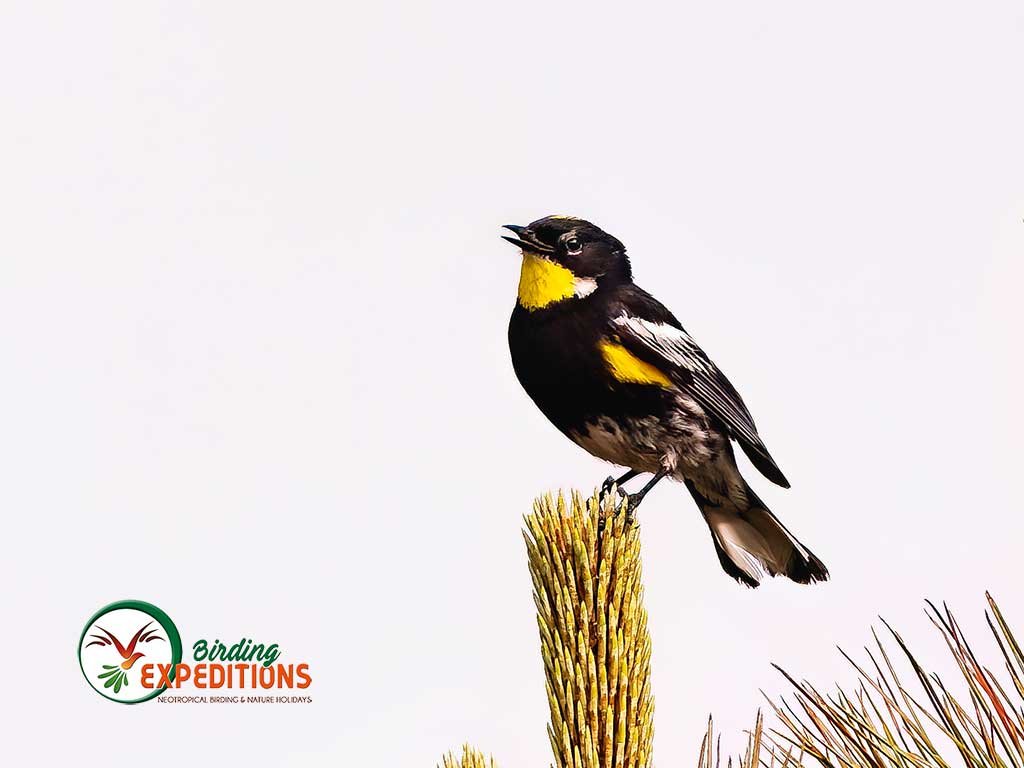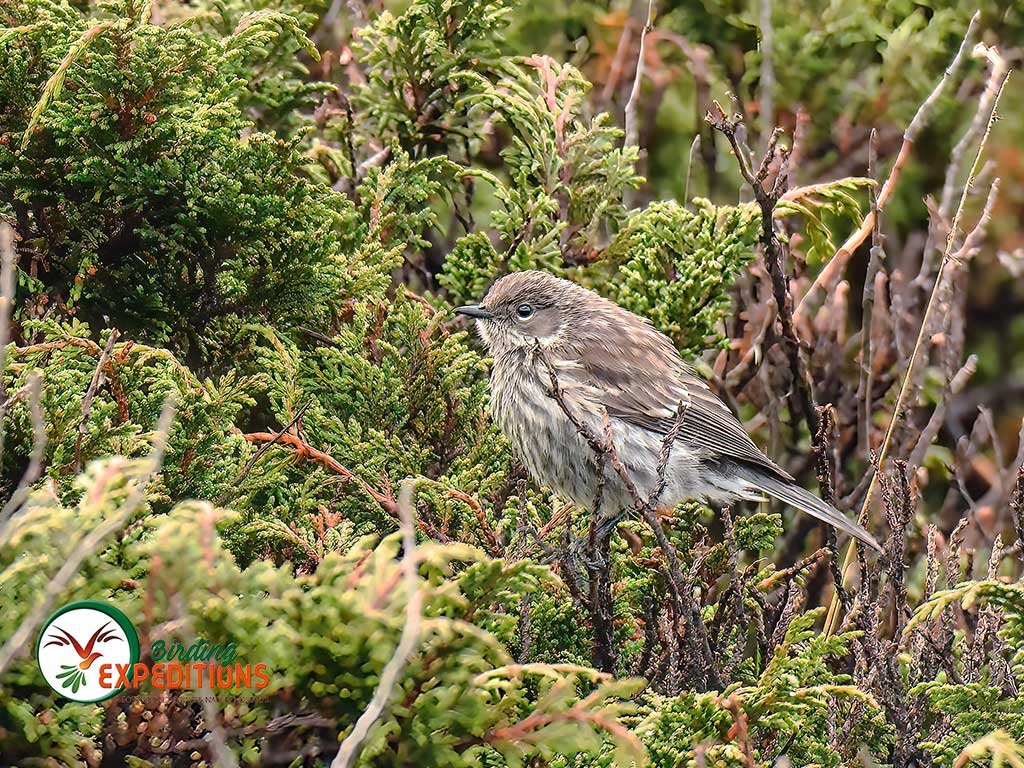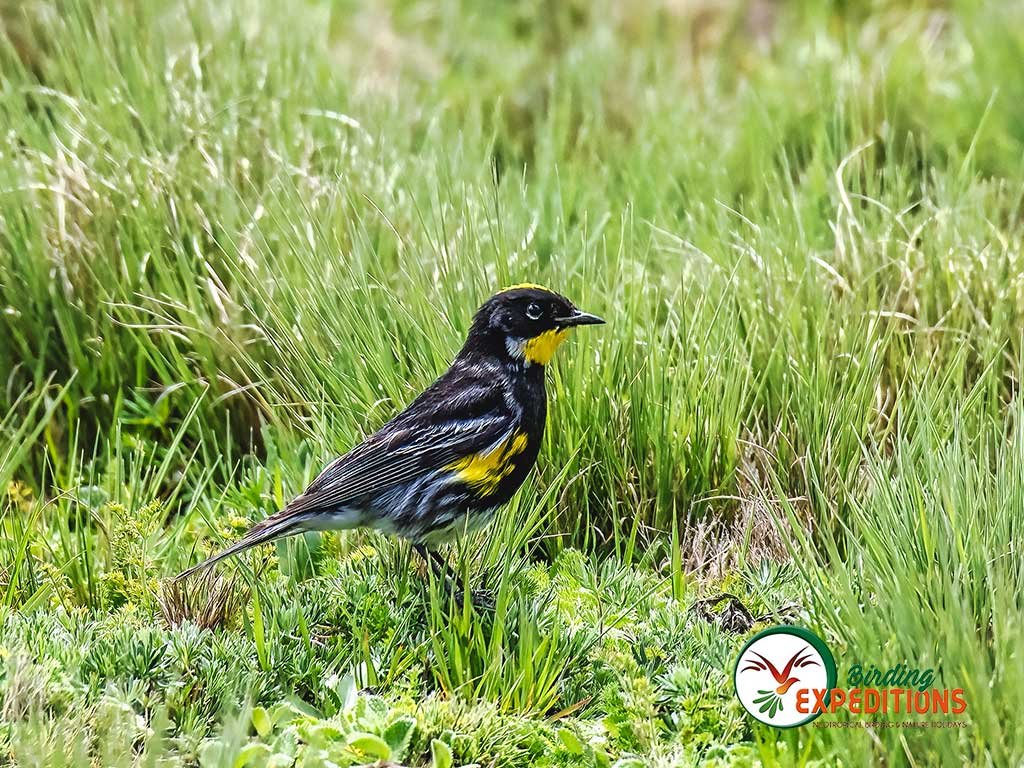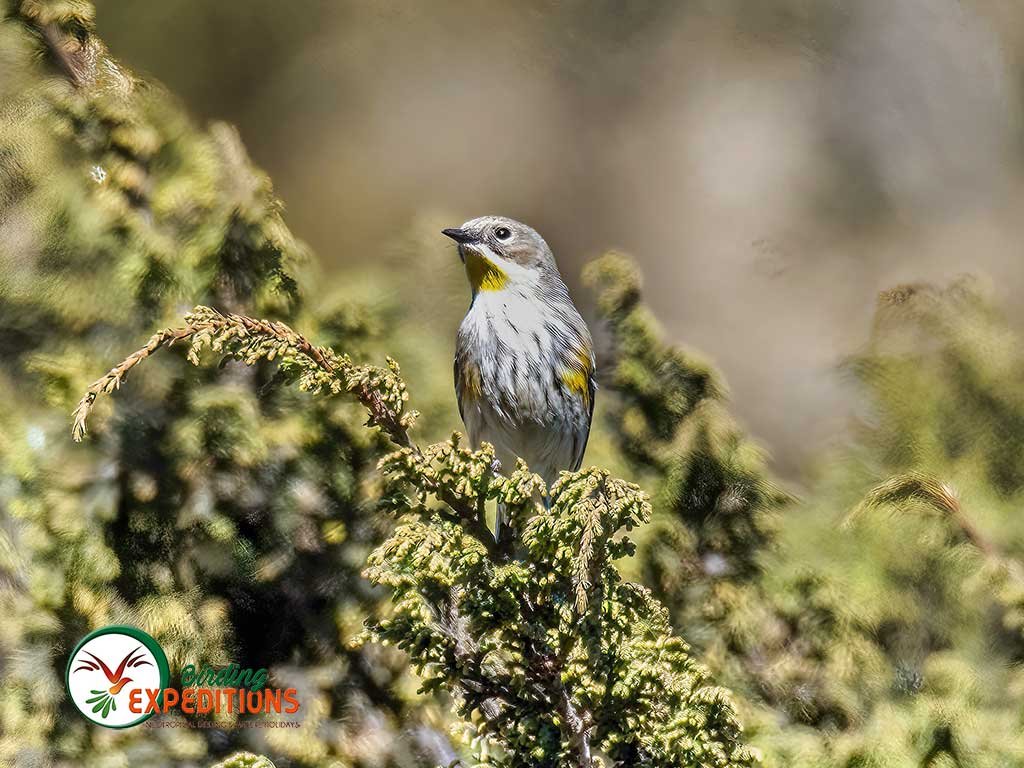

Goldman’s Warbler in Guatemala (Setophaga goldmani)
New World Warblers
Introduction
Goldman’s Warbler in Guatemala is one of the most distinctive and localized bird species found in Central America. Endemic to the highlands of Huehuetenango and southeastern Mexico, this striking warbler is a major target for birders and nature photographers visiting the country’s mountainous regions. Its restricted range, unique appearance, and fascinating evolutionary history make it a highlight of any birding tour in Guatemala.
-
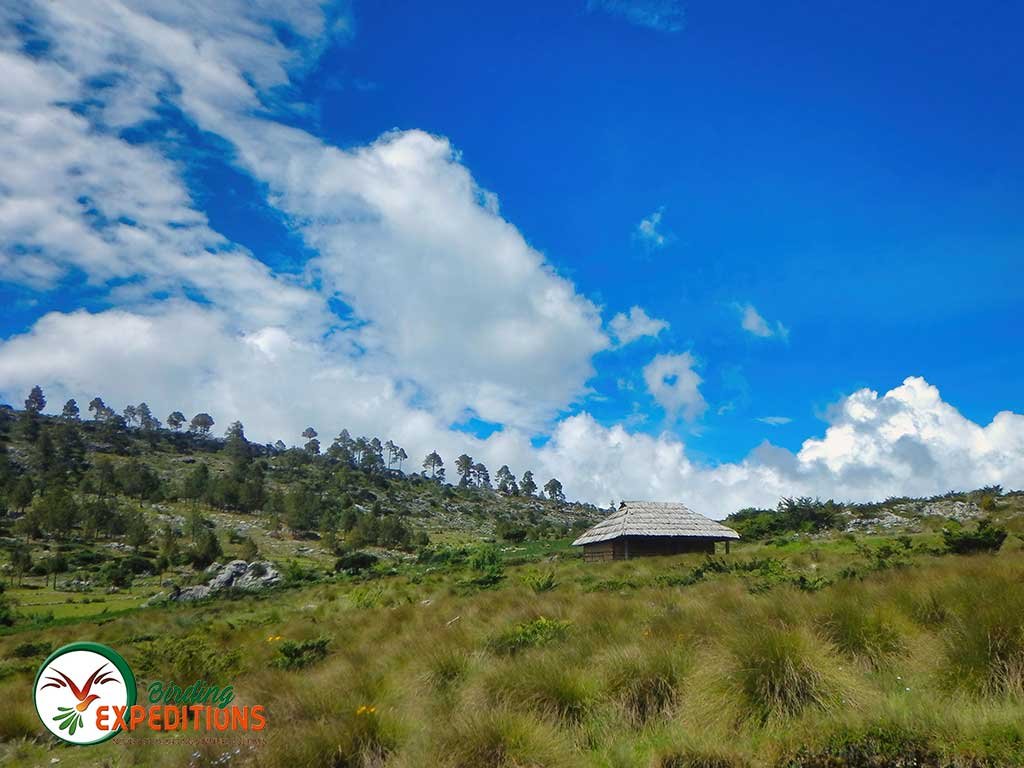
Habitat of Goldman’s Warbler in Guatemala
Huehuetenango Highlands & Todos Santos Municipal Park
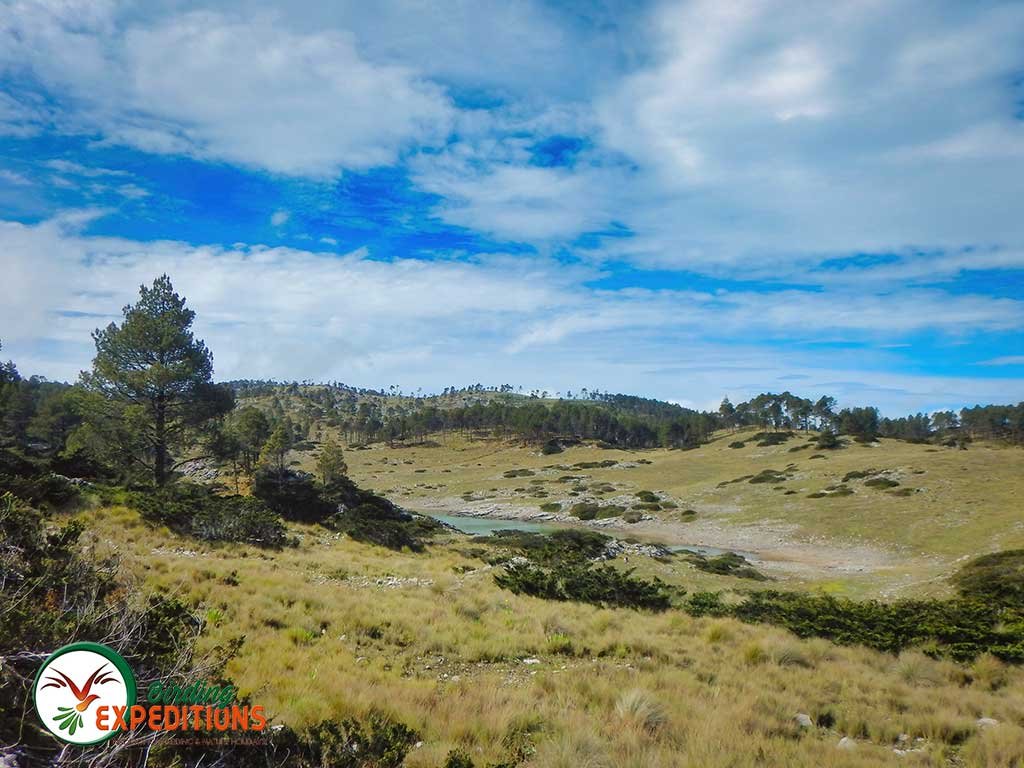
The natural habitat of Goldman’s Warbler is concentrated in the mountains of Huehuetenango, which host some of Guatemala’s oldest geological formations. These mountains were shaped by the collision of the Caribbean and North American tectonic plates, producing granite-rich landscapes and dramatic elevation changes.
Some areas exceed 3,000 meters (9,800 ft) in altitude, creating a complex mosaic of ecosystems:
-
Dry thorn forests at lower elevations
-
Pine–oak forests in mid-elevation zones
-
Cold, humid highland plateaus at the summit
This altitudinal gradient supports a high diversity of bird species, with Goldman’s Warbler favoring the cooler pine and mixed forests near the upper slopes.
-
-
Species Profile: Goldman’s Warbler
-
Class: Aves
-
Order: Passeriformes
-
Family: Parulidae
-
Genus: Setophaga
-
Species: Setophaga goldmani
Goldman’s Warbler is part of the Yellow‑rumped Warbler complex, yet it is now widely recognized as a distinct species due to its morphology, plumage, and geographic isolation.
-
-
Taxonomy & Relationship to Other Warblers
Divisions of the Yellow‑rumped Warbler Complex
The Yellow‑rumped Warbler group is traditionally divided into four forms:
-
Audubon’s Warbler – North America
-
Myrtle Warbler – North America
-
Black‑fronted Warbler – Mexico
-
Goldman’s Warbler – Guatemala & SE Mexico
Modern classifications, including the IOC World Bird List, recognize Goldman’s Warbler as a full species. Its plumage differences, limited range, and lack of interbreeding strongly support this classification.
For field observers, Goldman’s Warbler is visually distinct and easily separable from Audubon’s and Myrtle Warblers.
-
- The IOC World Bird List classifies Goldman’s Warbler, Myrtle Warbler, and Audubon’s as separate species (Setophaga goldmani, Setophaga coronata, and Setophaga auduboni).
-
Other Bird Species Observed in the Area
A birding trip to observe Goldman’s Warbler in Guatemala often includes many other highland specialties, such as:
-
Olive Warbler
-
Pink‑headed Warbler
-
Blackburnian Warbler
-
Golden‑crowned Kinglet
-
Ocellated Quail
-
Pine Siskin & Black‑capped Siskin
-
Wine‑throated Hummingbird
Nocturnal & Mammal Encounters
Night outings may reveal:
-
Unspotted Saw‑whet Owl
-
Whiskered Screech‑Owl
Occasional mammal sightings include Jaguarundi and Coyotes, adding to the richness of the experience.
-
Cultural Context of Huehuetenango
The Indigenous Communities
The remote highlands are home to indigenous communities that have preserved strong traditions due to their isolation. Visitors may encounter:
-
Traditional dress codes
-
Horse racing during Day of the Dead celebrations
-
Hunting practices using ancestral techniques
-
Community events rarely seen elsewhere in Guatemala
This cultural dimension adds depth to birding and photography trips, making the journey as meaningful as the wildlife itself.
-
Birding & Photography Opportunities
Bird & Nature Photography in Huehuetenango
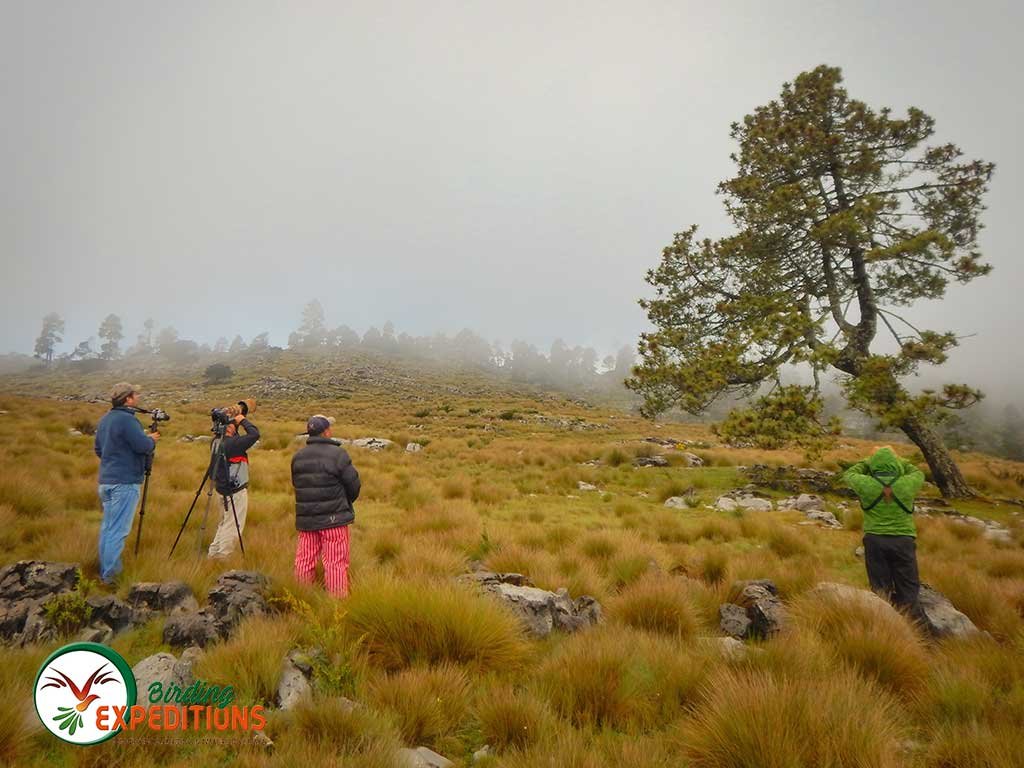
The vast, open landscapes and high‑altitude forests provide exceptional opportunities for bird and nature photography. However, the scale of the scenery makes photography challenging and rewarding.
Recommended stay: at least 3 days to fully capture target species and landscapes.
Practical Tips:
-
Prepare for cold temperatures, especially mornings and evenings
-
Avoid the rainy season (June–October) if possible
-
Snow, hail, and fog can occur at high elevations
Despite the challenges, most visitors successfully observe their target species and leave wishing they had stayed longer.
When to Visit Goldman’s Warbler in Guatemala
The best months to visit are during the dry season, when access is easier, and bird activity is high. Clear mornings offer the best light for photography and observation.
Conclusion: Why Goldman’s Warbler Matters
Observing the Goldman’s Warbler in Guatemala is more than a birding goal — it is an immersive experience that combines endemic wildlife, dramatic geology, and living cultural traditions. Few places in Central America offer such a complete natural and human story in one destination.
This region represents a rare opportunity to learn, observe, photograph, and connect deeply with nature.
-
Goldman’s Warbler Photo Gallery