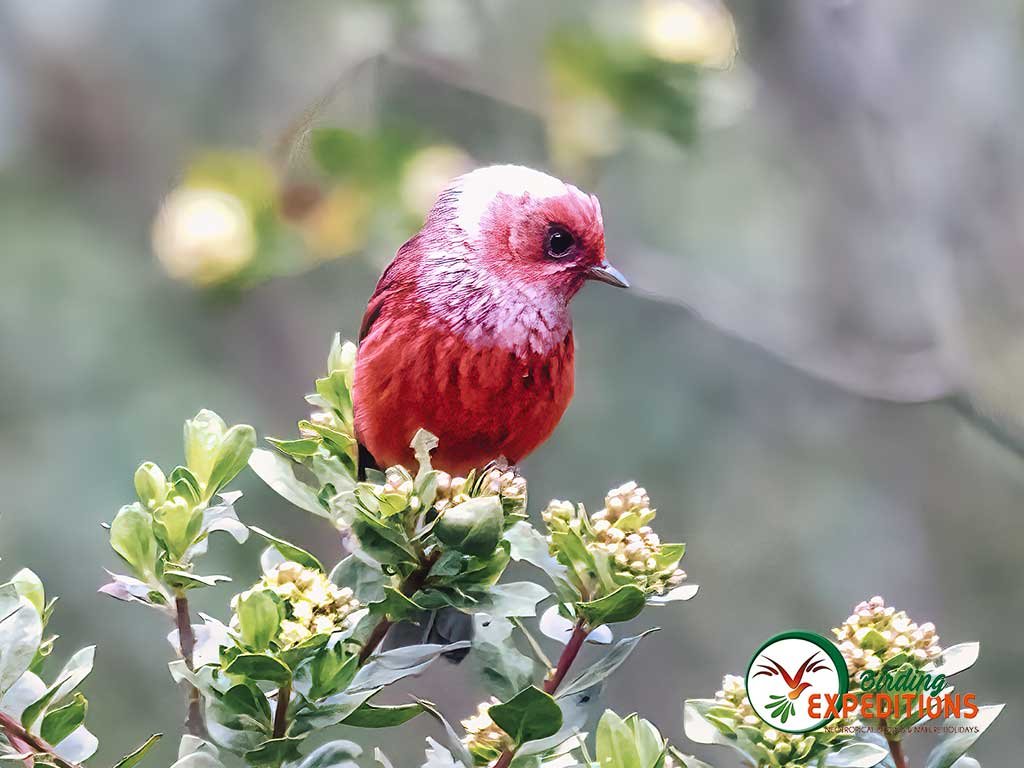

Where to Observe the Pink-Headed Warbler in Guatemala:
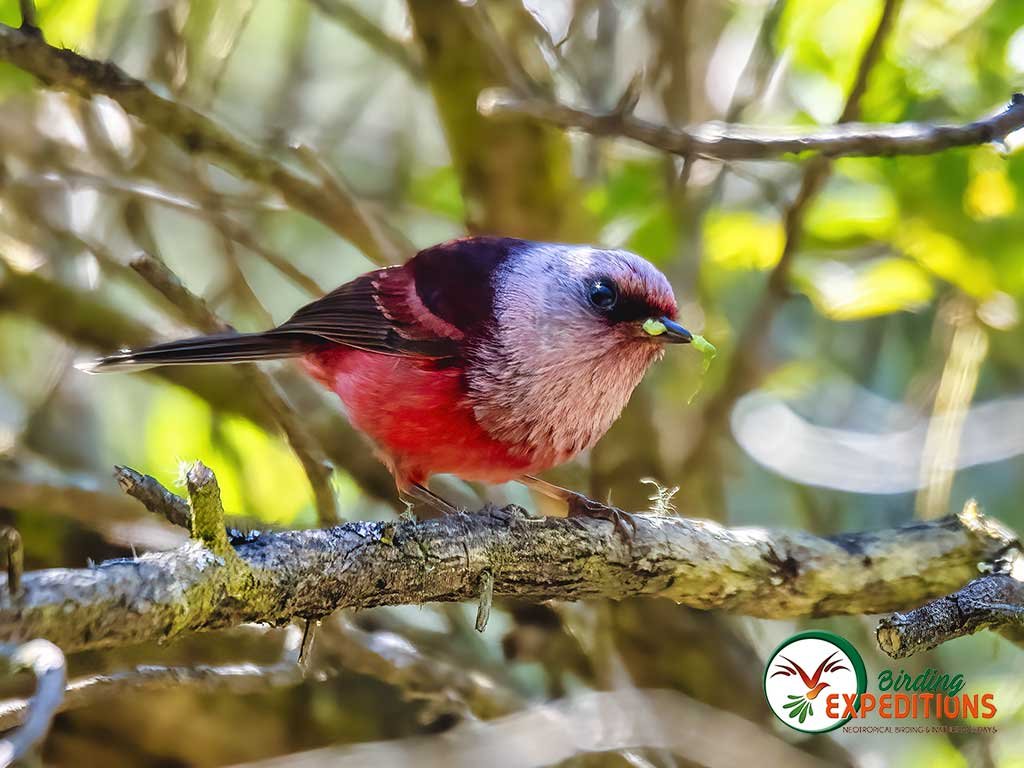
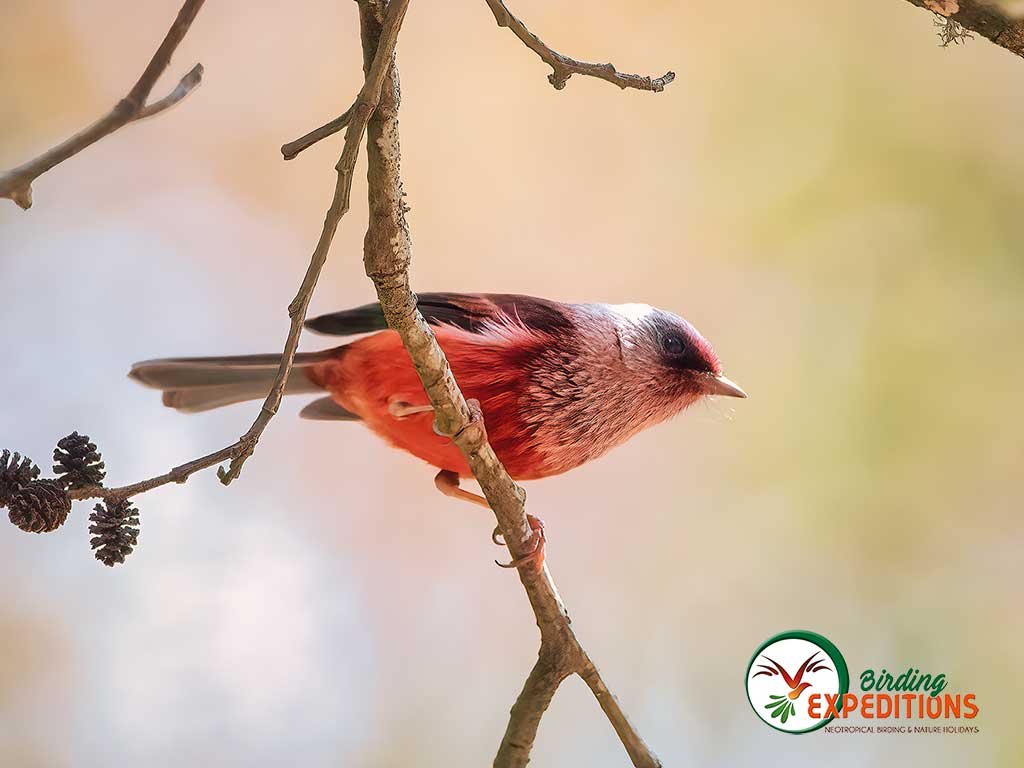
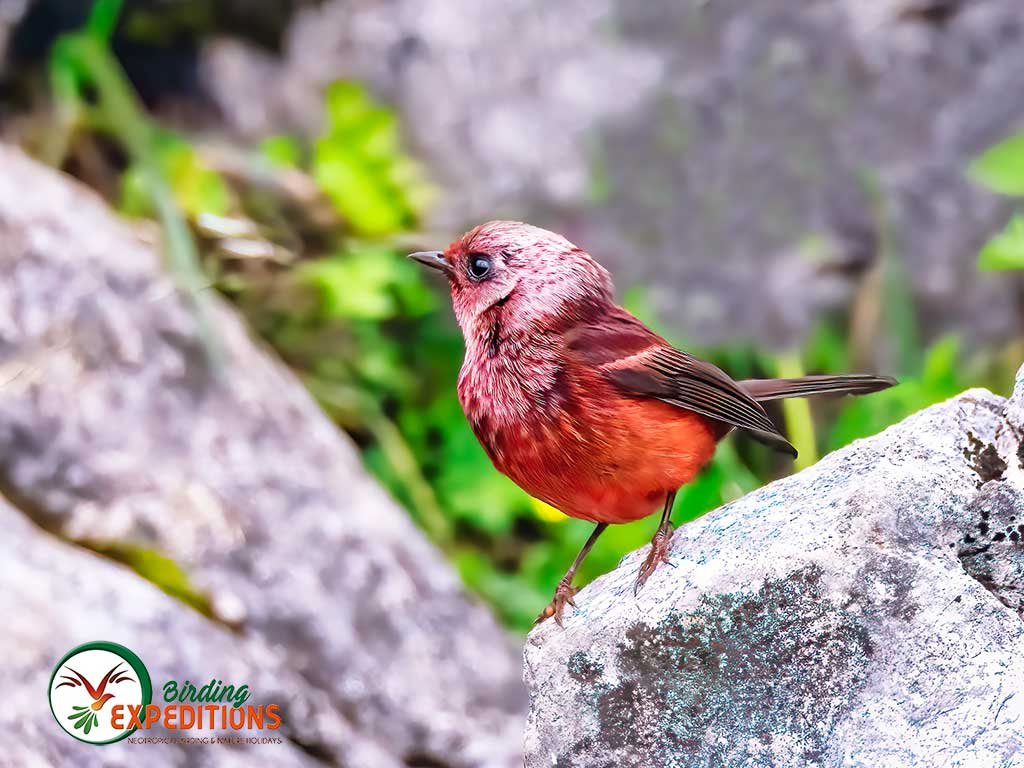
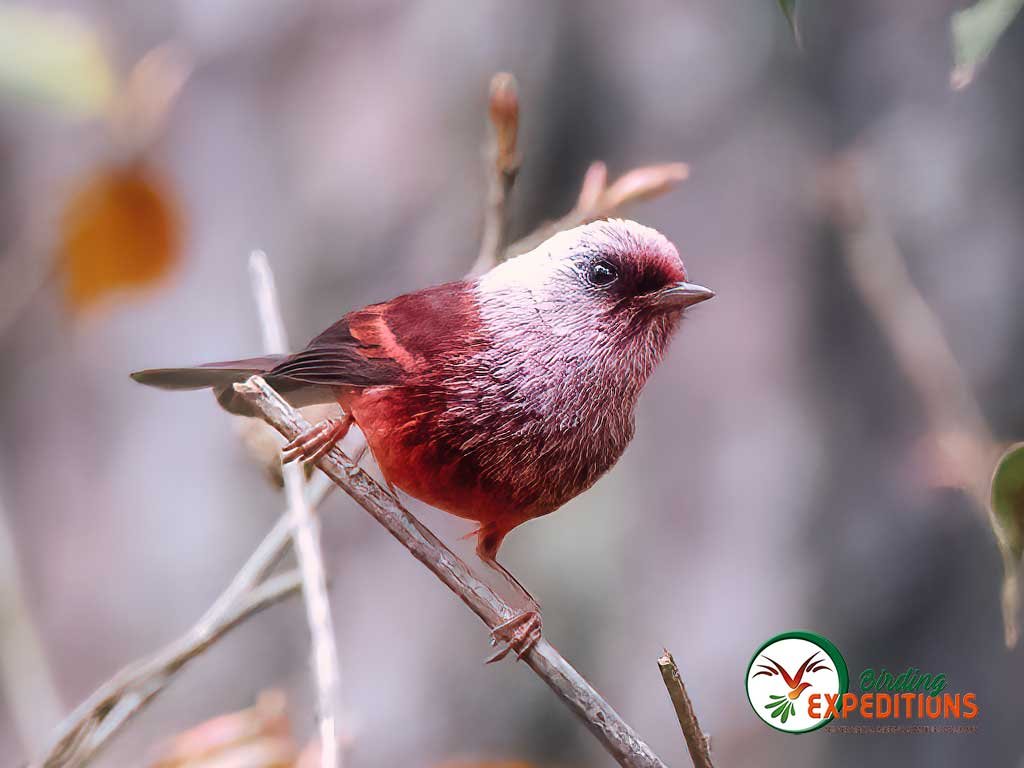
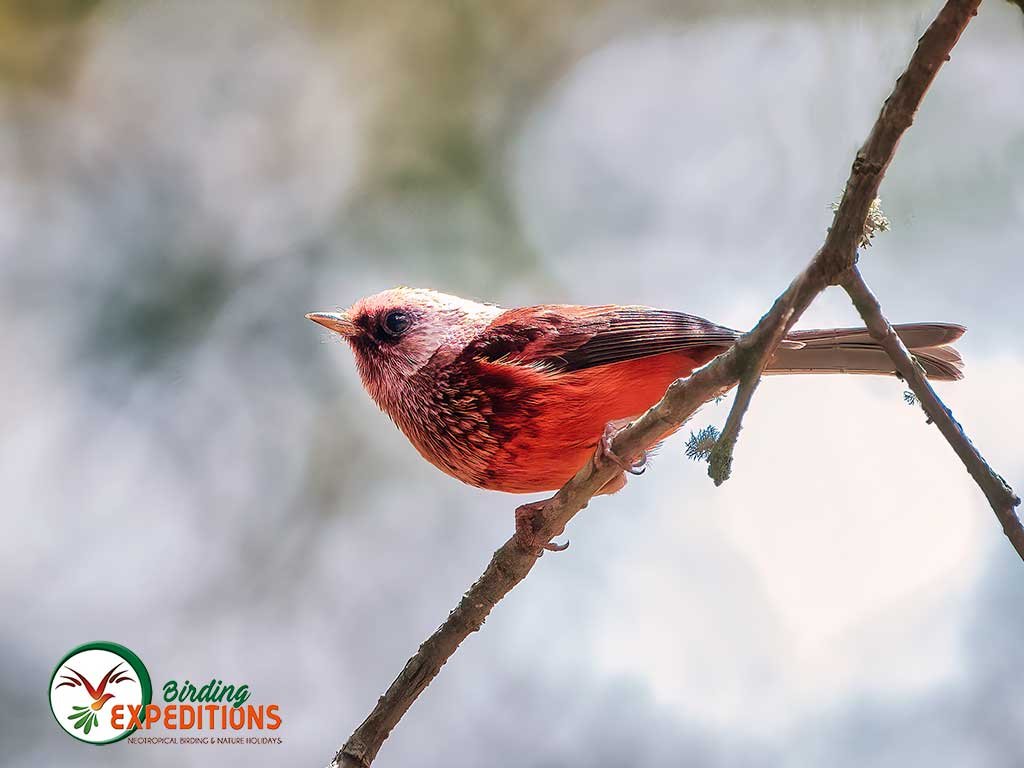
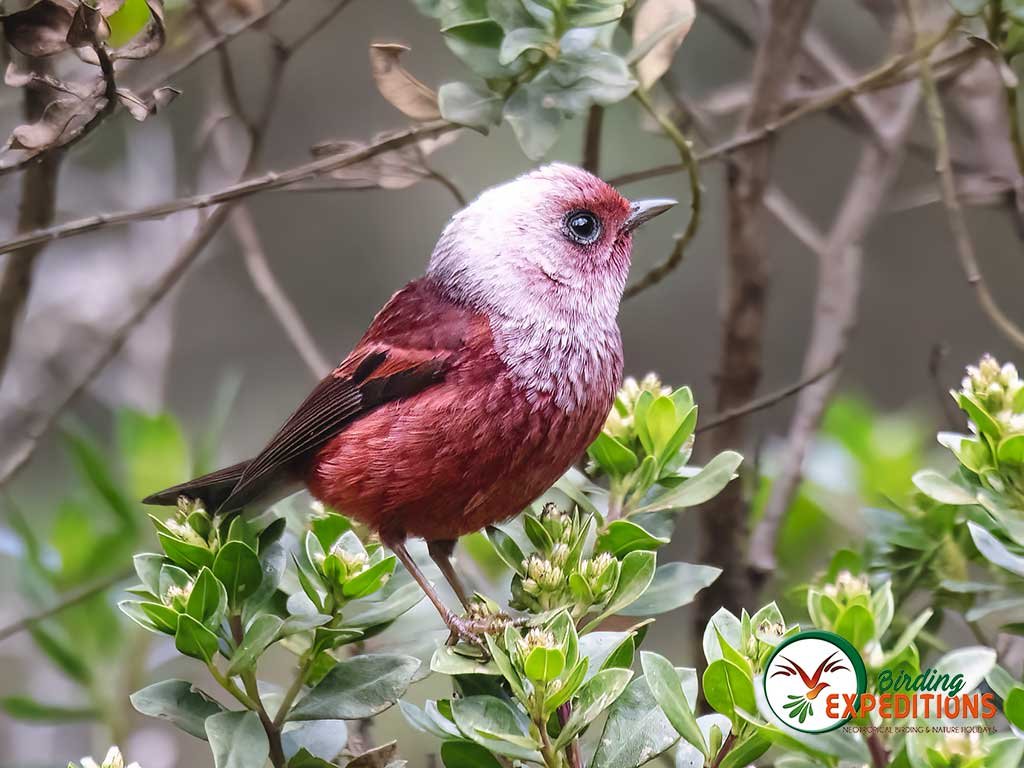
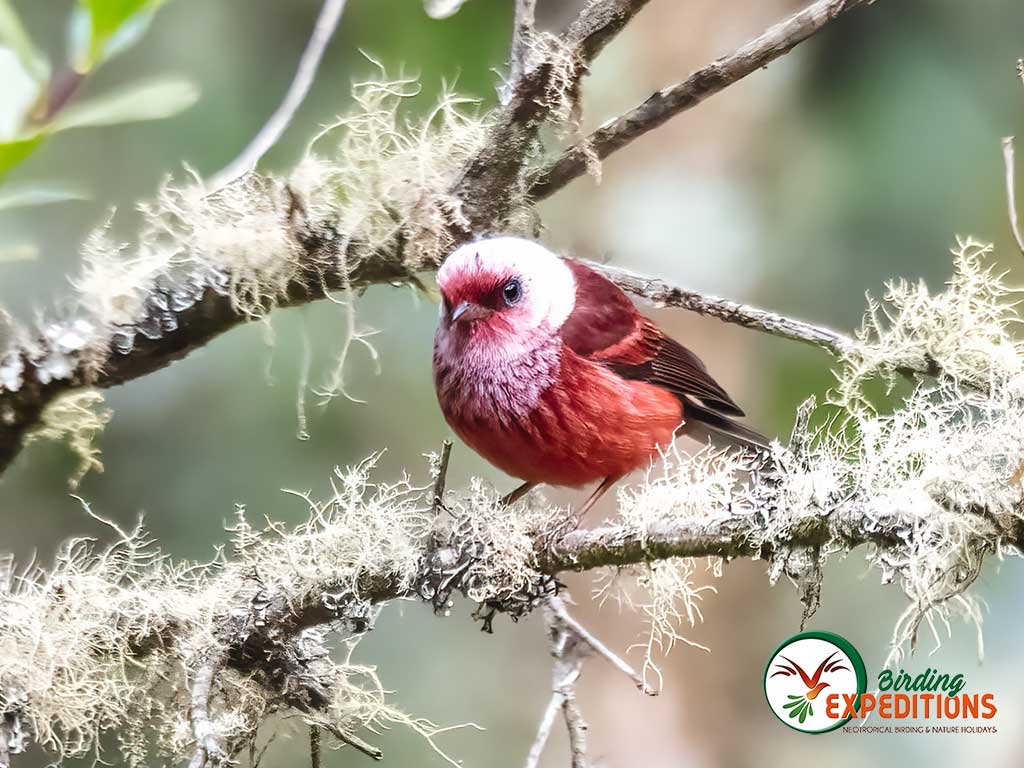
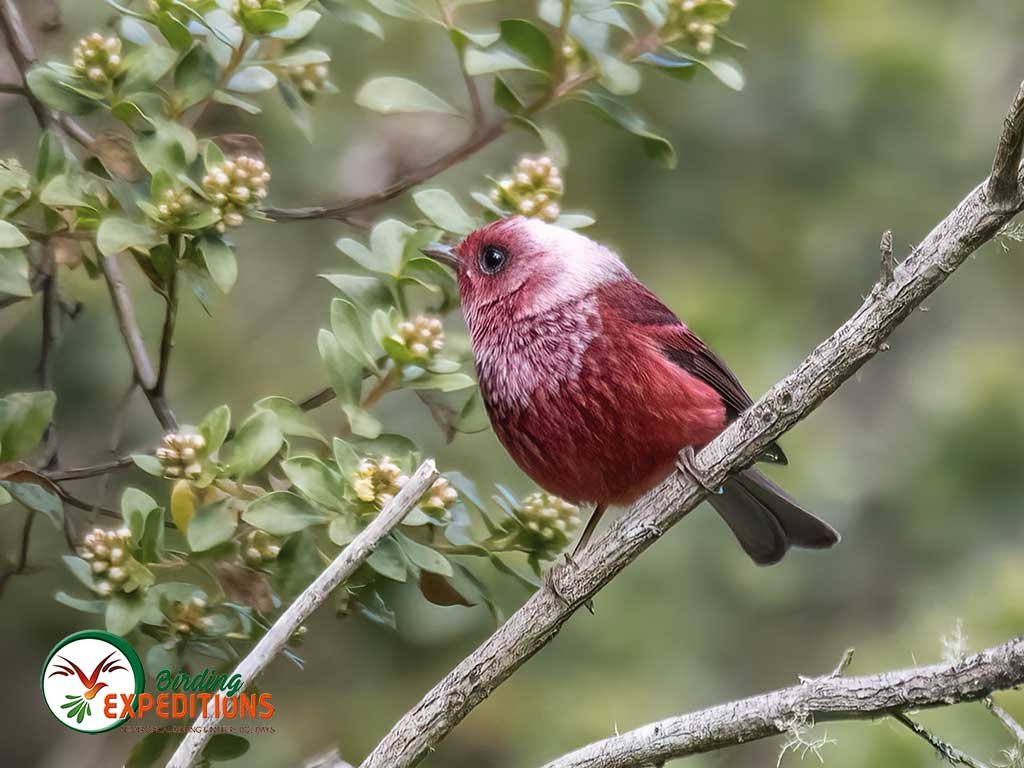
The Pink-headed Warbler (Cardellina versicolor) is a small bird restricted to the highlands of Guatemala and Chiapas, Mexico.
Have a distinctive bright pink head and a black cap on its back.
So, the male and female are very similar, so it’s easy to confuse them. However, the IUCN Red List classified the bird as vulnerable.
Inhabit mainly above 2,000 m. and common in oak-alder-conifer forests, pine, cypress, fir, and shrubby vegetation in the coniferous forest of pine, cypress, and fir.
Breeding Season
The breeding season starts in January or February; nests have been found from late March to late May, and juveniles in June. The nest is a globular structure placed on the ground.
Also, outside the breeding season, Pink-headed Warblers join mixed flocks with other resident and migratory warblers.
The Pink-headed Warbler Population In Guatemala
Populations of this species may fluctuate locally. In Chiapas, the Pink-headed Warbler is considered rare, but there are variations among localities.
In Guatemala, the species is found mainly in pine forests at elevations of 2,000 to 3,000 m.
The Conservation Status
By the way, the Pink-headed Warbler is listed as Vulnerable primarily due to ongoing habitat loss driven by rapid human population growth.
Best places to observe the Pink-headed Warbler in Guatemala
In effect, there are many areas in Guatemala where you can see the Pink-headed Warbler. Here are 5 of the best destinations to spot and photograph it.
Tecpan
Tecpan is in the central highlands of Guatemala, at an altitude of 2,286 meters above sea level, within the Atitlan IBA, Guatemala, GT015.
This destination is desirable because it is located in the center of Guatemala’s main tourist destinations.
For example, this hotspot is just 1 hour from Antigua, Guatemala, 1:30 from Guatemala City, and 1:15 from Lake Atitlan.
In addition, the terrain in the areas we visit is slightly undulating, so the effort of the walks is minimal.
The pine-oak forest of the destination hosts many exotic regional endemics, including the beautiful Pink-headed Warbler.
Other species found here are the Rufous-browed Wren, Mountain Trogon, Blue-throated Motmot, Rufous-collared Robin, and Green-throated Mountain Gem, among others.
This small region in the mountain forest biome is a beautiful, easy-to-reach destination for birdwatchers and photographers.
Fuentes Georginas
Fuentes Georginas is located about 20 kilometers from Quetzaltenango’s central area, 2:30 from Lake Atitlan, and 4 hours from Guatemala City.
This natural destination is located in the municipality of Zunil, Quetzaltenango.
The mountains in the Central Guatemalan highlands are covered with pine and oak forests. Those forests go from 1,000 to almost 4,000-meter of elevation
In fact elevation levels have different environmental characteristics (temperature, evaporation, and pluvial precipitation), making different kinds of forests at every level.
There is a well-preserved representation of both forests, which are excellent habitats for observing many iconic birds, such as the Pink-headed Warbler.
Other exciting birds are the Wine-throated Hummingbird, the Crescent-chested Warbler, and even the Horned Guan, among others.
El Astillero Municipal Park, San Marcos
El Astillero, Municipal Park of San Marcos, is an area of strategic importance, located in the hydrographic basin of two basins of vital importance for the Department of San Marcos.
Have a conserved forest inhabited by endemic and threatened species with high ecological value, such as the Pink-headed Warbler (Cardellina versicolor).
Additionally, other species such as Highland Guan (Penelopina nigra), the Resplendent Quetzal (Pharomachrus mocinno), the Horned Guan (Oreophasis derbianus), and several species of amphibians and reptiles.
El Astillero is located inside IBA GT013 Tacana – Tajumulco.
The altitude ranges between 2,100 and 3,105 meters above sea level; it is primarily a broadleaf, mixed, coniferous, and secondary forest.
The three viewpoints of the park are essential areas for the scenic beauty of the Tacaná (4092 masl) and Tajumulco (4220 masl) volcanoes, the highest volcanic cones in Central America.
The park area corresponds to the Suchiate River basin.
Therefore, it is essential to conserve the populations of endangered flora and fauna, making it a place of particular interest for scientific, ornithological, and nature tourism.
This reserve is located 5 hours from Guatemala City and only 10 minutes from the departmental capital of San Marcos.
Refugio del Quetzal – San Rafael Pie de la Cuesta – San Marcos
The Natural Reserve Refugio del Quetzal is found between La Fraternidad Village and the San Rafael Pie de la Cuesta municipality, just 18 kilometers from the capital of the San Marcos department and about 6 hours from Guatemala City.
The Quetzal refugee is also placed within the IBA GT013 – Tacana-Tajumulco, situated in the Guatemalan volcanic belt, and incorporates the Tajumulco and Tacana volcanoes.
This reserve ranges in elevation from 1,750 to 2,000 masl.
Between November and April, the possibility of watching the Resplendent Quetzal increases.
A well-developed hiking trail system enhances the natural reserve experience, designed to preserve the Resplendent Quetzal.
The spot stands out because exceptionally dense vegetation protects the soil from sunlight and humidity, creating an ideal natural environment for the Resplendent Quetzal.
Also, this is a protected area of roughly 90 hectares that is part of the Guatemalan Protected Areas System -SIGAP- and the National Council of Protected Areas -CONAP-. Additionally, it serves as a sanctuary for various plant and animal species.
Todos Santos Cuchumatan Reserve
This reserve is situated approximately 6 hours from Guatemala City. Los Cuchumatanes is the highest and oldest part of the Guatemalan mountains.
Some rocks have been there since the creation of the Pangea continent about 240 million years ago.
This destination is located on the western side of the country and was formed by the collision of the Cocos and Caribbean tectonic plates.
The highest point is about 3,800 MASL.
Driving from the base to the top, you can see about 1,800 MASL coniferous vegetation.
The vegetation is mostly Pinus oocarpa and P. montezumae.
But the most exciting part of the mountain is that the plateau formed at around 3,000 meters.
It has beautiful conifers such as Juniperus comitana, Abies guatemalensis, and Pinus pseudostrobus.
Those three are distributed in spots.
The rocky landscape of the plateau among the tree spots is covered with natural grass and other small plants.
It is one of the two places in the country with natural grasslands.
This is known as “paramo” and is the refuge for local populations of species that were considered migrants but which have recently been demonstrated to be resident (Savannah Sparrow, Ruby-crowned Kinglet, Olive Warbler).
The area’s high biodiversity consists of just a few very abundant species, such as Black-capped Siskin, and is home to Goldman’s Warbler, an endemic species of Guatemala.
Pink-headed Warbler Tours
If you are interested in discovering the Pink-headed Warbler, Birding Expeditions can customize day tours or multi-day birding trips to find the birds of Guatemala.
Please contact us; we would be pleased to talk with you.
Pink-headed Warbler of Guatemala